
Autism Spectrum Disorder

Autism Spectrum Disorder

Autism Spectrum Disorder

What is it?

Autism spectrum disorder (ASD) refers to a group of neurodevelopmental disorders that affect how people communicate, learn, behave, and socially interact.

What are common signs of ASD?

Children and youth with ASD usually experience two types of symptoms:

  1.  Social impairment and communication difficulties
  • Avoids or does not keep eye contact
  • Does not respond to name 
  • Does not show facial expressions like happy, sad, angry, and surprised 
  • Does not play simple interactive games 
  • Uses few or no gestures (e.g. does not point at what you point to or wave goodbye)
  • Does not share interests with others 
  • Does not notice when others are hurt or sad 
  • Does not pretend in play 
  • Shows little interest in peers
  • Has trouble understanding other people’s feelings or talking about own feelings 
  • Does not play games with turn-taking 
  1. Repetitive or restricted behaviours
  • Lines up toys or other objects and gets upset when order is changed
  • Repeats the same words or phrases over and over 
  • Plays with toys the same way every time
  • Is focused on parts of objects 
  • Has obsessive interests
  • Must follow certain routines and gets upset by minor changes
  • Flaps hands or rocks body in circles
  • Has unusual reactions to the way things sound, smell, taste, look or feel
  • More sensitive or less sensitive than others to sensory experiences (pain, temperature, texture, smell, taste, or sound)

Other signs: 

  • Delayed language skills
  • Delayed movement skills
  • Delayed cognitive or learning skills
  • Hyperactive, impulsive, and/or inattentive behaviour
  • Epilepsy or seizure disorder
  • Unusual eating and sleeping habits
  • Gastrointestinal issues 
  • Unusual mood or emotional reactions
  • Anxiety
  • Lack of fear or more fear than expected
  •  Self-harm

When is it time to seek professional help? 

ASD symptoms can vary greatly from child to child depending on the severity of the disorder. Children should be screened for developmental delays during periodic checkups.

You may also want to consider these tools:

First Signs®

Autism Navigator®

Modified Checklist for Autism in Toddlers (M-CHAT)

What makes ASD difficult to diagnose in children?

  • Symptoms of one disorder can look like another disorder. 
  • Symptoms of one disorder can hide symptoms of another disorder.
  • Symptoms can vary greatly from child to child. 
  • There are only a few guidelines and tests that help to diagnose other mental challenges in children with ASD.

What can be done?

Educational/behavioural interventions

Early behavioural/educational interventions have been very successful in many children with ASD. In these interventions, highly structured and intensive skill-oriented training sessions are used to help children develop social and language skills. 

Applied Behavioural Analysis (ABA) is a type of therapy that can improve social, communication, and learning skills through reinforcement strategies.

Modified Cognitive Behavioural Therapy (CBT) is an example of behavioural intervention. Cognitive Behavioural Therapy (CBT) teaches people to examine and change the way they think (cognitive), act (behaviour) and feel (emotionally and physically). Cognitive Behavior Therapy (CBT) is beneficial to people with Autism Spectrum Disorder (ASD) but scientists suggest that the method needs to be modified in relation to the child’s cognitive profile. 

Medications

While there is no medication that can treat ASD itself or even its main symptoms, there are medications that can help with related symptoms such as anxiety, depression, schizophrenia and obsessive-compulsive disorder. Antipsychotic medications are used to treat severe behavioural problems. Seizures can be treated with one or more anticonvulsant drugs. Medication used to treat people with attention deficit disorder can be used effectively to help decrease impulsivity and hyperactivity in people with ASD.

What makes some children more vulnerable to ASD? 

Scientists believe that both genetics and environment likely play a role in ASD. ASD is a complex disorder that is the result of many interacting genes as well as the result of genes interacting with the environment.  

Autism is more common in children born prematurely. Studies suggest that ASD could be a result of disruptions in brain growth very early in the child’s brain development. These disruptions may be the result of weakness in genes that control brain development and regulate how brain cells communicate with each other.

Where can I access support? 

An early diagnosis is important so that the child can get the help they need. Talk to the child’s family doctor or pediatrician. The doctor can refer the child to the BC Autism Assessment Network (BCCAAN) for further assessment and diagnosis.

Contact Autism Information Services BC (AIS BC), a provincial information centre for autism and related disorders. AIS BC has information on assessment, diagnosis and treatment options, and you can reach them by phone, in person or via email.

Talk to the child’s guardianship worker to explore what options are available for assessment so their diagnosis and treatment plan can be included in their Care Plan. The guardianship worker will help make appropriate referrals for specialized supports and services.
Phone

Main:
604-544-1110

Toll-Free Foster Parent Line:
1-800-663-9999

Office hours: 8:30 am - 4:00 pm, Monday to Friday

PROVINCIAL CENTRALIZED SCREENING

Foster parents are encouraged to call this number in the event of an EMERGENCY or CRISIS occurring after regular office hours:

1-800-663-9122

REPORT CHILD ABUSE

If you think a child or youth under 19 years of age is being abused or neglected, you have the legal duty to report your concern to a child welfare worker. Phone 1-800-663-9122 at any time of the day or night. Visit the Government of BC website for more info.

address

BCFPA Provincial Office
Suite 208 - 20641 Logan Avenue
Langley, BC V3A 7R3

Email

contact us

Fill out our contact form...

Contact Us

Contact Us

We would like to hear from you. Please send us a message by filling out the form below and we will get back with you shortly.

Sending

Our work takes place on the traditional and unceded Coast Salish territories of the Kwantlen, Katzie, Matsqui and Semiahmoo First Nations. BCFPA is committed to reconciliation with all Indigenous communities, and creating a space where we listen, learn and grow together.

© 2021 BC Foster Parents. Site design by Mighty Sparrow Design.

Attention Deficit Hyperactivity Disorder

Attention Deficit Hyperactivity Disorder

Attention Deficit/Hyperactivity Disorder

What is it?

Attention Deficit Hyperactivity Disorder (ADHD) is a common neurodevelopmental disorder. In some children, they’re noticeable as early as three years of age. Children who have ADHD have higher levels of inattention, impulsivity, and/or hyperactivity than their peers.

What are the symptoms of ADHD in children?

There are three types of ADHD.

1. Inattentive. Most symptoms fall under inattention, distraction and disorganization.

  • Trouble paying attention to details
  • A tendency to make careless mistakes in schoolwork or other activities
  • Difficulty staying focused on tasks or play activities
  • Apparent problems with listening
  • Difficulty following instructions
  • Problems with organizing tasks or activities
  • Avoidance or dislike of tasks that require mental effort
  • A tendency to lose things like toys, notebooks, or homework
  • Easily distracted
  • Forgetfulness in daily activities, such as forgetting to do chores

Because children with this form of ADHD are less likely to disrupt the classroom or other activities, their symptoms may not be noticed as quickly.

2. Hyperactive-impulsive. Most symptoms are related to hyperactivity and impulsiveness.

  • Fidgeting or squirming
  • Difficulty remaining seated
  • Excessive running or climbing
  • Difficulty playing quietly
  • Always seeming to be “on the go”
  • Excessive talking
  • Blurting out answers, interrupting the questioner
  • Difficulty waiting for a turn or in line
  • Problems with interrupting or intruding on others’ conversations, games or activities

2. Combined. It is a mix of many inattentive symptoms and hyperactive-impulsive symptoms.

The physical signs of ADHD cannot be detected by a lab test. Typical ADHD symptoms may overlap with those of other physical and psychological disorders.

ADHD doesn’t cause other psychological or developmental problems. However, children with ADHD are more likely than others to also have conditions such as:

  • Learning disabilities, including problems with reading, writing, and math skills 
  • Anxiety disorders 
  • Depression
  • Disruptive mood dysregulation disorder: severe irritability, anger, and frequent, intense temper outbursts
  • Oppositional defiant disorder (ODD) 
  • Conduct disorder 
  • Bipolar disorder
  • Tourette syndrome  

When is it time to seek professional help?

Young children with ADHD are more likely to experience difficulties in daycare or school, including problems with peer relationships, learning, and a higher risk of injuries. An early diagnosis is important so that the child can get the support they need to minimize challenges. 

Since the early years is a critical time for brain development, it is important for children to learn positive behaviours and for caregivers to learn how to support their unique individual needs, even for young children who are showing some symptoms of ADHD but do not have ADHD. It’s best to address problematic behaviours sooner rather than later. 

What can be done?

ADHD is best managed with a combination of medications and counselling. Effective treatment of childhood ADHD involves behavioural skills training, behavioural school intervention and medication. Behavioural skills training can help parents and caregivers develop a positive relationship with the child and encourage positive behaviour. Behavioural skills training has been shown to work as well as medication for ADHD in young children. 

Any good treatment plan will include follow-up and monitoring. In some cases, the symptoms of ADHD become less severe or change as the child grows older, particularly if the child’s environment is conducive to their development and their self-regulation skills improve. 

What makes some children more vulnerable to ADHD?

Many genetic studies indicate that ADHD runs in families. However, it is important to understand that ADHD is a complex disorder that is the result of many interacting genes as well as the result of genes interacting with the environment. Other risk factors for ADHD include exposure to environmental toxins (e.g. lead or pesticides) during pregnancy or childhood, premature birth or low birth weight or brain injury. 

Where can I access support? 

An early diagnosis is important so that the child can get the help that they need. Talk to the child’s family doctor or pediatrician. The child may be referred to specialists (e.g. psychologist, behavioural specialists, psychiatrist, neurologist, or developmental pediatrician). 

Talk to the child’s guardianship worker to explore what options are available for assessment so their diagnosis and treatment plan can be included in their Care Plan. The guardianship worker will help make appropriate referrals for specialized supports and services. 

Your local Child and Youth Mental Health team may be able to provide an assessment or refer the child to specialized resources in your community. Your local CYMH office offers a range of free and voluntary mental health services and supports for children from 0-18 years of age and their families. These services include assessments, therapy and treatment, education and referrals to specialized programs and resources. There are 100 intake clinics for children, youth and their families at convenient locations throughout BC. Please note that not all local Child and Youth Mental Health teams provide assessments and support for ADHD. Call your local Child and Youth Mental Health office first to ask if they provide this service.

Phone

Main:
604-544-1110

Toll-Free Foster Parent Line:
1-800-663-9999

Office hours: 8:30 am - 4:00 pm, Monday to Friday

PROVINCIAL CENTRALIZED SCREENING

Foster parents are encouraged to call this number in the event of an EMERGENCY or CRISIS occurring after regular office hours:

1-800-663-9122

REPORT CHILD ABUSE

If you think a child or youth under 19 years of age is being abused or neglected, you have the legal duty to report your concern to a child welfare worker. Phone 1-800-663-9122 at any time of the day or night. Visit the Government of BC website for more info.

address

BCFPA Provincial Office
Suite 208 - 20641 Logan Avenue
Langley, BC V3A 7R3

Email

contact us

Fill out our contact form...

Contact Us

Contact Us

We would like to hear from you. Please send us a message by filling out the form below and we will get back with you shortly.

Sending

Our work takes place on the traditional and unceded Coast Salish territories of the Kwantlen, Katzie, Matsqui and Semiahmoo First Nations. BCFPA is committed to reconciliation with all Indigenous communities, and creating a space where we listen, learn and grow together.

© 2021 BC Foster Parents. Site design by Mighty Sparrow Design.
Anxiety

Anxiety

Anxiety

What is it?

Anxiety is a general term used to describe a feeling of extreme worry or unease. When a child feels anxiety that lasts a long time and prevents them from doing things like going to school or playing with their friends, then it becomes an anxiety disorder.

Anxiety is normal and a part of life. When a child is threatened or in actual danger, their body has an alarm system that prepares the body to defend them from harm. Symptoms of anxiety are accompanied by a “fight, flight or freeze” reaction, which is triggered by real or imagined threats.

What types of anxiety are common in children?

Generalized anxiety disorder: Children with generalized anxiety disorder tend to have worries that span multiple topics. It causes children to worry almost every day — and over lots of things.

Panic disorder: Children with panic disorder have frequent, sudden anxiety attacks that can cause overwhelming physical symptoms.

Separation anxiety: Children who experience separation anxiety get very anxious and upset when separated from parents and caregivers. They worry that bad things will happen to them or loved ones while separated.

Social anxiety: Children with social anxiety have an intense fear of social situations and become self-conscious around others.

Specific phobia: While it’s normal for children to have fears, some children can experience a more intense and longer-lasting irrational fear of certain things (e.g. fear of enclosed spaces, insects, needles, thunder).

What are the symptoms of anxiety disorders?

Anxiety has many symptoms and can look different from child to child.

Physical symptoms include:

  • Crying
  • Rapid heart rate
  • Quick breathing or difficulty catching one’s breath
  • Muscle aches (especially stomach and headaches)
  • Quick irritability and being out of control during outbursts
  • Feeling tense and fidgety
  • Using the toilet often
  • Shaking, dizziness, tingling
  • Sweating
  • Fatigue

Emotional symptoms include:

  • Ongoing worries about friends, school, or activities
  • Worrying about things before they happen
  • A need for everything to be “perfect”
  • Constant thoughts and fears about their safety (or of others, such as parents and siblings)
  • Reluctance or refusal to go to school
  • “Clingy” behaviour
  • Inability to concentrate
  • Irritability
  • Trouble sleeping
  • Inability to relax

When is it time to seek professional help?

1. When it is not getting better or is getting worse, and efforts to tackle it yourself have not worked

2. When it’s slowing down their development or having a significant effect on their schooling or relationships

3. When it happens very frequently

What can be done?

A severe anxiety disorder can delay or derail child development. Research shows that there are two main treatments that often help children or youth with an anxiety disorder.
1. Cognitive Behavioural Therapy (CBT) is an evidence-based and structured type of therapy that focuses on teaching children and families how to:

  • identify and challenge anxious thoughts
  • practice facing feared situations in a stepwise way
  • helping parents and caregivers to promote courageousness in children and change patterns of reassurance

2. Medications are sometimes a useful component of treating children with anxiety.

What makes some children more vulnerable to anxiety?

  • Biological factors such as genes and brain chemistry
  • Psychological factors such as temperament and coping strategies
  • Environmental factors such as anxious parenting, trauma, adverse childhood experiences and toxic stress

Where can I access support?

Talk to the child’s family doctor or pediatrician if anxiety causes the child to limit participation in activities or worry often.

Talk to the child’s guardianship worker to explore what options are available for assessment so their diagnosis and treatment plan can be included in their Care Plan. The guardianship worker will help make appropriate referrals for specialized supports and services.

Get help from a mental health professional by getting an assessment through your local Child and Youth Mental Health team. Your local CYMH office offers a range of free and voluntary mental health services and supports for children from 0-18 years of age and their families. These services include assessments, therapy and treatment, education and referrals to specialized programs and resources. There are 100 intake clinics for children, youth and their families at convenient locations throughout BC.

You can also contact a private psychologist or counsellor through the BC Association of Clinical Counsellors or the BC Psychological Association. You can use website filters to search for a counsellor in your community that specializes in certain mental health challenges.

Phone

Main:
604-544-1110

Toll-Free Foster Parent Line:
1-800-663-9999

Office hours: 8:30 am - 4:00 pm, Monday to Friday

PROVINCIAL CENTRALIZED SCREENING

Foster parents are encouraged to call this number in the event of an EMERGENCY or CRISIS occurring after regular office hours:

1-800-663-9122

REPORT CHILD ABUSE

If you think a child or youth under 19 years of age is being abused or neglected, you have the legal duty to report your concern to a child welfare worker. Phone 1-800-663-9122 at any time of the day or night. Visit the Government of BC website for more info.

address

BCFPA Provincial Office
Suite 208 - 20641 Logan Avenue
Langley, BC V3A 7R3

Email

contact us

Fill out our contact form...

Contact Us

Contact Us

We would like to hear from you. Please send us a message by filling out the form below and we will get back with you shortly.

Sending

Our work takes place on the traditional and unceded Coast Salish territories of the Kwantlen, Katzie, Matsqui and Semiahmoo First Nations. BCFPA is committed to reconciliation with all Indigenous communities, and creating a space where we listen, learn and grow together.

© 2021 BC Foster Parents. Site design by Mighty Sparrow Design.

Psychological First Aid

Psychological First Aid

Psychological First Aid:
Tips for Helping Children after Traumatic Events

Psychological First Aid is an evidence-informed approach to helping survivors in the aftermath of traumatic events. It is consistent with research evidence on risk and resilience following trauma, understanding that survivors will experience a broad range of reactions and will need compassionate support from caregivers.

Below are situations where children exhibit trauma responses and what caregivers can do to respond and provide trauma-informed care.

Surfing Emotional Waves Worksheet

Calming Big Emotions Worksheet

Reaction/Behaviour

If the child has problems sleeping, doesn’t want to go to bed, won’t sleep alone or wakes up at night sleeping…

When children are scared, they want to be with people who help them feel safe, and they worry about their families when they are not together. Going to bed alone may remind them of that separation. Since bedtime is a time when there are less distractions, it is often a time when children think about the things they fear and can be scared of going to sleep.

Response

Have a bedtime routine like a story or cuddle time. Explain the routine so they know what to expect.

Hold them and assure them that they are safe, that you are there and will not leave. Understand that they are not being difficult on purpose. This may take time, but when they feel safer, they will sleep better.

Do calming and positive activities together to help them think about other things.

Reaction/Behaviour

If a child cries or complains whenever you leave them, even when you go to the bathroom…

Children who cannot yet speak or say how they feel may show their fear by clinging or crying. It is not a form of manipulation. Children’s bodies react to separations – their stomach sinks and their heart beats faster. Goodbyes may remind them of any separation.

Response

Respond by trying to stay with them and avoid separations. For brief separations, help them name their feelings and link them to their experience. Let them know that this goodbye is different and that you’ll be back soon.

“I know you’re scared and you don’t want me to go but this is different, and I’ll be right back.”

For longer separations, have them stay with familiar people and let them know what to expect. It’s important to tell them where you are going and why, and when you will come back. Let them know you will be thinking of them. You can also leave something of yours and call them often if you can.

Reaction/Behaviour

If the child has problems eating, eats too much, or refuses food…

Stress affects children’s appetite. Eating healthy is important but focusing too much on eating can cause stress and tension in your relationship.

Response

Keep healthy snacks around. Young children often eat on the go. As the child’s level of stress goes down, their eating habits will likely return to normal. Don’t force them to eat. Eat together and make meal times fun and relaxing.

If you are worried, or if the child loses a significant amount of weight, consult a pediatrician.

Reaction/Behaviour

If the child is not able to do the things they used to do, such as use the potty, or talk like they used to…

Response

When young children are stressed or scared, they temporarily lose abilities or skills they recently learned. This is their way of telling us that they are not okay and need our help. As the child feels safer, they will recover the ability he lost.

Losing an ability after children have gained it (like starting to wet the bed again) can make them feel ashamed or embarrassed. Caregivers should be understanding and supportive. The child is not doing this on purpose.

Avoid criticism. It makes them worried that they’ll never learn or relearn something.

Do not force the child. Instead of focusing on the ability, help the child feel understood, accepted, and supported.

Reaction/Behaviour

If the child is reckless and does dangerous things…

Response

It may seem strange, but when children feel unsafe, they often behave in unsafe ways. It is one way of saying, “I need you to keep me safe.”

Respond by showing them other more positive ways that they can have your attention.

Be calm and explain that what they are doing is unsafe. Tell them that they are important, and you wouldn’t want anything to happen to them.

Reaction/Behaviour

If the child is scared by things that did not scare them before.

Response

Young children believe their adults especially their parents and caregivers are all-powerful and can protect them from anything. This belief helps them feel safe. A traumatic event causes this belief to change and without it, the world is a scarier place for the child.

Many things may remind the child of the traumatic event such as ambulances, people yelling or a scared look on your face. When the child is scared, talk to them about how you will keep them safe.

If they talk about monsters, join her in chasing them out. “Go away, monster. Don’t bother (child’s name). I’m going to tell the monster boo, and it will get scared and go away.”

Reaction/Behaviour

If the child seems hyperactive, can’t sit still, and doesn’t pay attention to anything…

Response

While some children are naturally active, children who have experienced traumatic events are often fearful that they will happen again. Fear creates nervous energy that stays in children’s bodies. When their minds are stuck on traumatic memories, it is hard to pay attention to other things.

Respond by helping the child recognize and name their feelings (e.g. fear, worry, etc) and reassure them that they are safe.

Help them get rid of nervous energy by doing some deep breathing, stretching, running or playing. Sit with them and do an activity you both enjoy. Even if they don’t stop running around, this helps them. If the child is naturally active, focus on the positive. Think of all the energy they have and find activities that fit his needs.

Reaction/Behaviour

If a child plays in a violent way…

Response

Young children often talk through play. Violent play can be their way of telling us how difficult things were or are, and how they feel inside. Listen carefully when they talk. As your child plays, notice the feelings they have and help them name feelings. Be there to support them by holding them and soothing them.

If they get overly upset or plays out the same upsetting scene, help them calm down and feel safe. Consider getting professional help to help address the behaviour.

Reaction/Behaviour

If the child seems stubborn, demanding and controlling, insisting that things be done their way…

Response

Between the age of 18 months to 3 years, young children often seem to have controlling behaviour. It is a normal part of child development and helps them feel safe and important. When children feel unsafe, they may become more controlling than usual. This is one way of dealing with fears and the lack of control they felt during the traumatic event. They are saying, “Things were so difficult so I need to have control over something.”

Respond by allowing the child to have control over small things. Give them choices over what they wear or eat, the games you play or the books you read. Balance giving the child choices and control with giving her structure and routines. Predictability will make them feel safe. Cheer the child on as they try new things.

Reaction/Behaviour

If the child throws tantrums and yells a lot more than usual…

Response

Tantrums are a normal part of childhood. It’s frustrating when you can’t do things and when you don’t have the words to say what you want or need.

Let the child know that you understand how hard this is for them. Respond with understanding rather than correction. If they cry or yell, stay with them and let them know that you are there for them.

Reaction/Behaviour

If a child hits you…

Response

For children, hitting is a way of expressing anger or getting your attention. When children hit adults, it’s a sign that they feel unsafe. It’s scary to be able to hit someone who’s supposed to protect you. If the child can already use words, help them name their feelings and express their anger in more positive ways (e.g. talking, pausing, deep breathing).

Hitting can also come from seeing other people hit each other. Each time the child hits, let them know that this is not okay. Hold her hands, so she can’t hit and have her sit down. Say something like, “It’s not okay to hit, it’s not safe. When you hit, you are going to need to sit down.” If you are having conflict with other adults, try to work it out in private, away from where the child can see or hear you.

Reaction/Behaviour

If the child says “go away, I hate you!”

Response

When traumatic memories are triggered in the child’s brain, young children often get mad at adults because they believe they should have stopped it from happening. Remember what the child has been through. They don’t mean everything that they are saying. They are angry and dealing with so many difficult feelings.

Support the child’s feeling of anger, but gently redirect the anger. Say something like, “I know you are mad because lots of bad things have happened. I really wish they didn’t happen, but sometimes there are things that are out of our control.”

Reaction/Behaviour

If a child doesn’t want to play or do anything or seems to not have any feelings…

Response

The child may be feeling sad and overwhelmed. When children are stressed, some can be expressive and others shut down. Children need you in both circumstances. You can sit by the child and keep them close. Let them know that you care. If you can, give words to their feelings. Let them know it’s okay to feel sad, mad, or worried. Say something like, “It seems like you don’t want to do anything. I wonder if you are sad. It’s okay to be sad. I will stay with you until you are feeling better.”

Try to do things with the child, anything they might enjoy like read a book, sing, play together.

Reaction/Behaviour

If a child cries a lot…

Response

If the child has experienced difficult changes, it is natural to feel sad or even feel grief and loss. Allow the child to express feelings of sadness.

Help them name their feelings and understand why they may feel that way. Support the child by sitting with her and giving her extra attention. Wait for them to open up and become ready to talk. When they’re ready to share their thoughts and feelings, listen with judgment.

Spend more time together and help the child feel hopeful about the future. Together, think about some plans for the future like going to the park or zoo and playing with friends.

Reaction/Behaviour

If a child misses people that they are unable to see temporarily or permanently in cases of death…

Response

Even though young children do not always express how they feel, be aware that it is difficult for them when they lose contact with important people in their family and community. If someone close to the child died, they may have questions as young children do not understand death and may think that the person can come back. Answer the child’s questions using simple and age-appropriate language. When strong reactions last longer than two weeks, seek help from a professional.

If it is safe, help the child stay in touch in some way (e.g. sending pictures or cards, calling, etc).

Help the child talk about these important people. Acknowledge how hard it is to not be able to see people we care for. Explain that, even when we are apart from people, we can still have positive feelings about them by remembering and talking about them.

Reaction/Behaviour

If a child misses things that they have lost because of a disaster or move…

Response

It is easy to lose sight of how much the loss of a toy or other important item such as a blanket can mean to a child. The things they miss give them a sense of safety and familiarity. Grieving for a toy is also the child’s way of grieving for the life they had before the traumatic event.

Allow the child to express feelings of sadness, grief and loss. If possible, try to find something that would replace the item that they are missing that would be acceptable and satisfying to the child. You can also distract them with other activities.

Phone

Main:
604-544-1110

Toll-Free Foster Parent Line:
1-800-663-9999

Office hours: 8:30 am - 4:00 pm, Monday to Friday

PROVINCIAL CENTRALIZED SCREENING

Foster parents are encouraged to call this number in the event of an EMERGENCY or CRISIS occurring after regular office hours:

1-800-663-9122

REPORT CHILD ABUSE

If you think a child or youth under 19 years of age is being abused or neglected, you have the legal duty to report your concern to a child welfare worker. Phone 1-800-663-9122 at any time of the day or night. Visit the Government of BC website for more info.

address

BCFPA Provincial Office
Suite 208 - 20641 Logan Avenue
Langley, BC V3A 7R3

Email

contact us

Fill out our contact form...

Contact Us

Contact Us

We would like to hear from you. Please send us a message by filling out the form below and we will get back with you shortly.

Sending

Our work takes place on the traditional and unceded Coast Salish territories of the Kwantlen, Katzie, Matsqui and Semiahmoo First Nations. BCFPA is committed to reconciliation with all Indigenous communities, and creating a space where we listen, learn and grow together.

© 2021 BC Foster Parents. Site design by Mighty Sparrow Design.

Trauma

Trauma

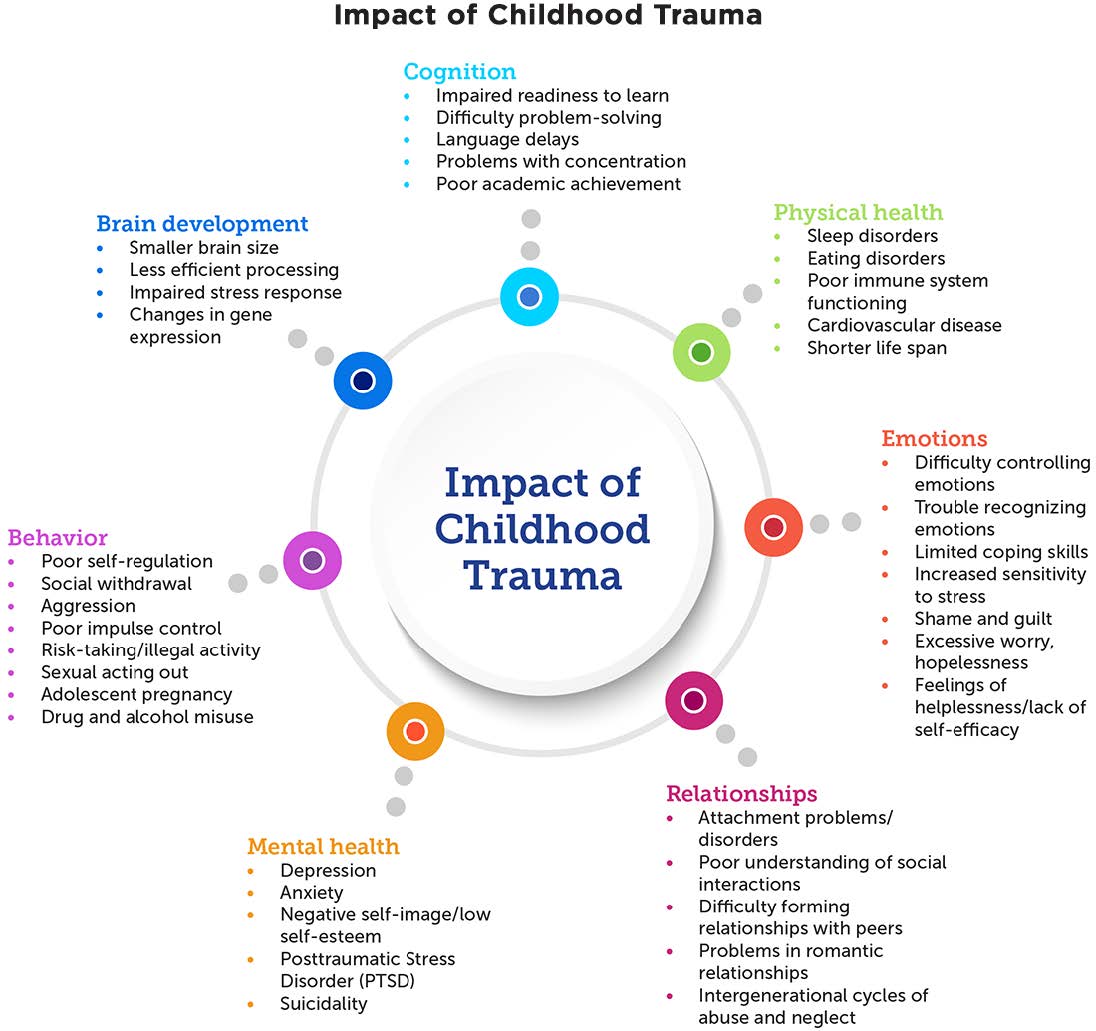
Trauma During the Early Years

Three Kinds of Responses to Stress

Positive stress 

Positive stress results from adverse experiences that are short-lived and is characterized by brief activation of the body’s alert systems. Brief increases in heart rate and hormone levels are signs of positive stress. Children may experience positive stress when they attend a new school, visit the dentist or meet someone new. This type of stress is considered normal and coping with it is an important part of the development process.

Tolerable stress 

Tolerable stress refers to more intense adverse experiences that activate the body’s alert systems to a greater degree. Examples of tolerable stress include a frightening natural disaster or the death of a loved one. If the stress response is time-limited and buffered by relationships with caring adults who help the child adapt, the child’s brain and other organs recover from what might otherwise be damaging effects.

Toxic stress

When a child experiences frequent and/or prolonged adversity without the support of caring adults, they can experience what is known as ‘toxic stress’. Toxic stress is the excessive activation of stress response systems in the body and brain. Toxic stress weakens the foundation of a child’s developing brain, which can lead to lifelong problems in learning, behaviour, and physical and mental health. 

How Early Childhood Experiences Affect Lifelong Health 

Trauma and children in foster care

Every child in foster care has experienced trauma. Not only do they suffer trauma from the circumstances that led to foster care in the first place, but they also experience trauma when they are separated from their parents, community and culture. At any age, it is traumatic for a child when they are removed from their home, family, familiar faces and neighbourhood. It is widely accepted that skin-to-skin contact between parents and their babies has significant health benefits for the infant. Physical contact and proximity to their parents is therefore crucial during a child’s early years. Attachment theory suggests that emotional distress and later health problems can be attributed to early childhood disruption of the parent-child bonding process.

The goal of caregivers should be to restore a child’s sense of safety and comfort. When children temporarily cannot live with their own family, foster caregivers step in and create a safe, secure and nurturing environment that responds to the child’s individual needs. Fostering children means helping them maintain contact with their family, community and culture with a view to reunification with their families or permanency. By understanding trauma, foster parents can help support a child’s healing, the parent-child relationship, and their family. A child’s recovery from trauma rests on having a supportive caregiving system, access to support, and service systems that are trauma-informed.

BCFPA - childhood trauma
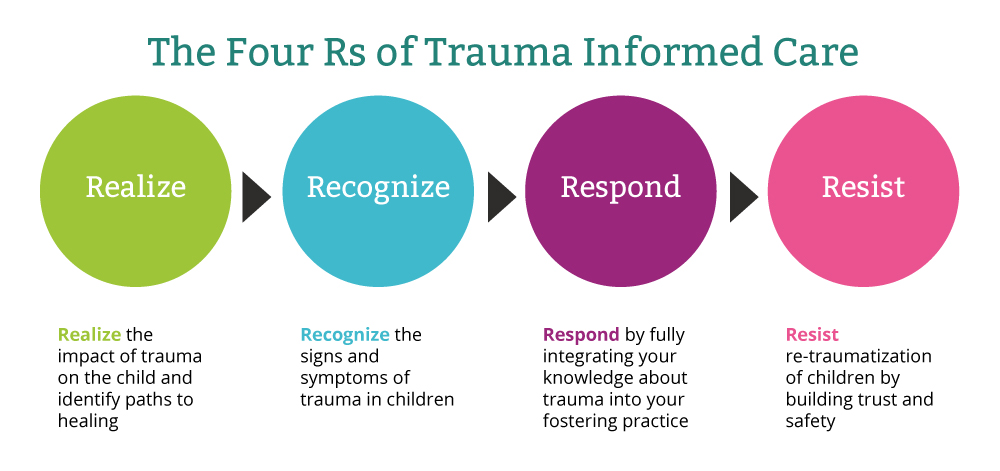
The 4 Rs of Trauma Informed Care

This figure is adapted from: Substance Abuse and Mental Health Services Administration. (2014). SAMHSA’s concept of trauma and Guidance for a trauma-informed approach. HHS publication no. (SMA) 14-4884. Rockville, MD: Substance Abuse and Mental Health Services Administration.

Quiz time!

Take this quick knowledge check about trauma and early childhood development.

Quiz (Early Years: Trauma)
True or False? Young age protects children from the impact of traumatic experiences.
True or False? Childhood trauma occurs when a child experiences an actual or threatened negative event, series of events, or set of circumstances that cause emotional pain and overwhelm the child’s ability to cope.
True or False? Significant maternal stress during pregnancy and poor maternal care affect a child's developing stress system.
True or False? Children are especially vulnerable to repeated stress activation during their early years as their brains and bodies are in a critical and sensitive period of development.
True or False? Not all stress is harmful. Stressful events can also be tolerable, or even helpful, depending on how much of a bodily stress response they provoke and how long the response lasts.
Stress responses activates a variety of hormone and neurochemical systems throughout the body. Which two hormones are produced by the body as a response to stress?
The prolonged activation of the stress response systems is called ___________.
True or False? The more adverse experiences in childhood, the greater the likelihood of developmental delays and health problems later in life.
True or False? Learning how to cope with mild or moderate stress is an important part of healthy child development.
True or False? Supportive, responsive relationships with caring adults as early in life as possible can prevent or reverse the damaging effects of toxic stress response.

References

A guide to toxic stress. (2020, January 6). Center on the Developing Child at Harvard University. https://developingchild.harvard.edu/guide/a-guide-to-toxic-stress/

Bruskas, D. (2008). Children in Foster Care: a Vulnerable Population at Risk. Journal of Child and Adolescent Psychiatric Nursing, 21(2), 70-77.

Doyle, J. J. (2007). Child protection and child outcomes: Measuring the effects of foster care. The American Economic Review, 96(5 ), 1583-1610.

Isquith, P., Maerlender, A., Racusin, R., Sengupta, A., & Straus, M. (2005). Psychosocial Treatment of Children in Foster Care: A review. Community Mental Health Journal 41(2), 199-221.

Lawrence, C., Carlson, E., & Egeland, B. (2006). The impact of foster care on development. Development and Psychopathology, 18, 57-76.

Neufeld, G., & Maté, G. (2004). Hold on to your kids: Why parents matter. Toronto: A.A. Knopf Canada.

Siegel, D. J., & Bryson, T. P. (2020). The power of showing up: How parental presence shapes who our kids become and how their brains get wired

Siegel, D. J., & Bryson, P. H. D. T. P. (2012). The whole-brain child. Random House.

What are ACEs? And how do they relate to toxic stress? (2020, October 30). Retrieved from https://developingchild.harvard.edu/resources/aces-and-toxic-stress-frequently-asked-questions/

Phone

Main:
604-544-1110

Toll-Free Foster Parent Line:
1-800-663-9999

Office hours: 8:30 am - 4:00 pm, Monday to Friday

PROVINCIAL CENTRALIZED SCREENING

Foster parents are encouraged to call this number in the event of an EMERGENCY or CRISIS occurring after regular office hours:

1-800-663-9122

REPORT CHILD ABUSE

If you think a child or youth under 19 years of age is being abused or neglected, you have the legal duty to report your concern to a child welfare worker. Phone 1-800-663-9122 at any time of the day or night. Visit the Government of BC website for more info.

address

BCFPA Provincial Office
Suite 208 - 20641 Logan Avenue
Langley, BC V3A 7R3

Email

contact us

Fill out our contact form...

Contact Us

Contact Us

We would like to hear from you. Please send us a message by filling out the form below and we will get back with you shortly.

Sending

Our work takes place on the traditional and unceded Coast Salish territories of the Kwantlen, Katzie, Matsqui and Semiahmoo First Nations. BCFPA is committed to reconciliation with all Indigenous communities, and creating a space where we listen, learn and grow together.

© 2021 BC Foster Parents. Site design by Mighty Sparrow Design.